
Three Pearls July 2026 - Freedom Requires Structure. A Country Needs Durable Institutions. A Portfolio Needs Discipline.
Here are Three Pearls to offer perspective on investing, wealth, and our financial lives.
As we head into the Fourth of July weekend, this edition begins with a reflection on the Supreme Court’s birthright citizenship decision, then turns to U.S. leadership in financial markets, and closes with a question from George Kinder: what does financial freedom mean and how can we achieve it?
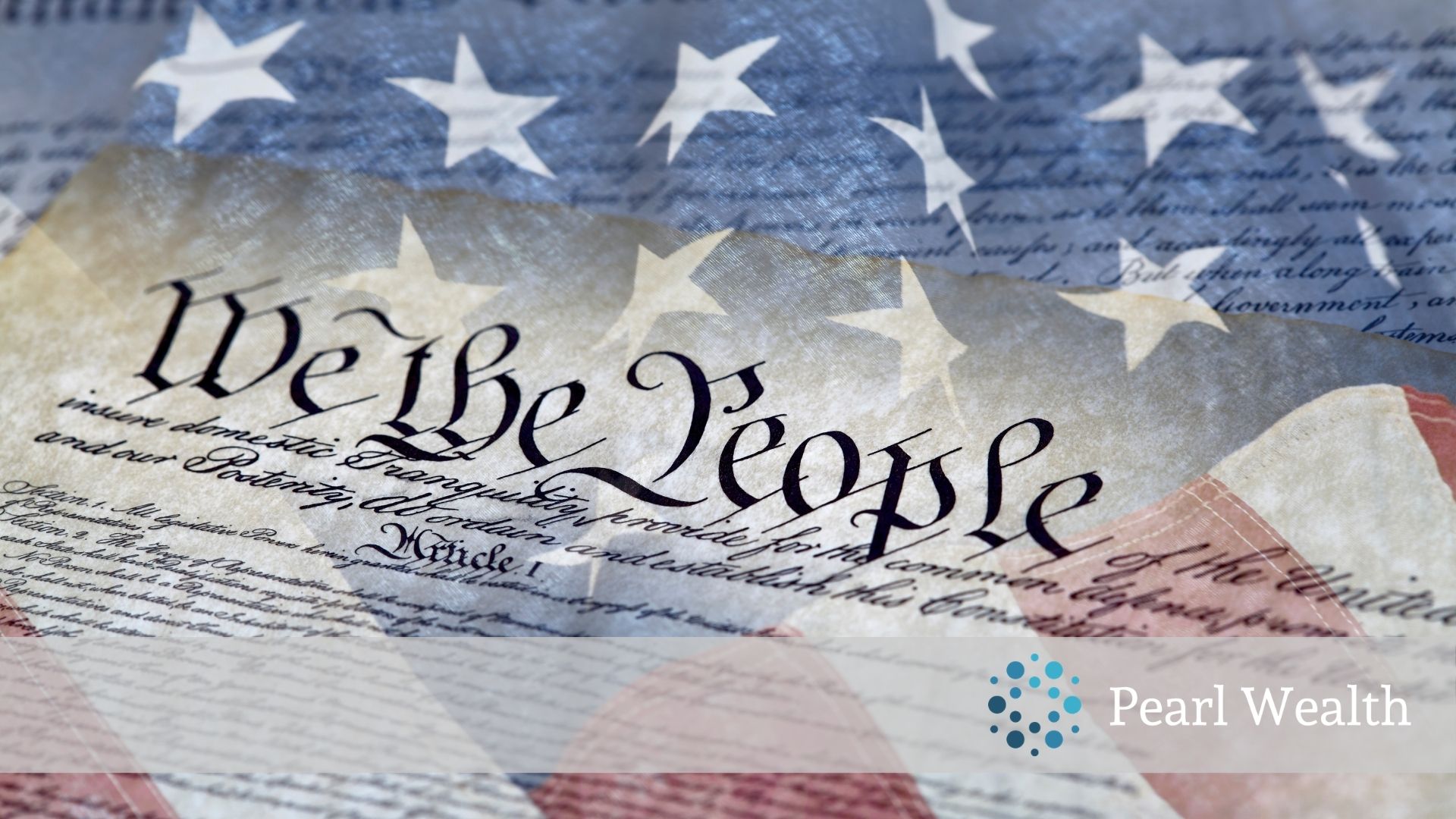
1. America at 250: The Constitution as a Living Inheritance
In a recent essay for The Free Press, Yale Law professor Jed Rubenfeld contemplates the Supreme Court’s June 30th birthright citizenship decision as the United States approaches its 250th anniversary. His broader point is that America’s identity has never been defined only by bloodline, ancestry, or ethnicity. From the beginning, the American experiment has rested on a constitutional idea of citizenship.
The Constitution is not just a legal document; it is a shared inheritance that each generation has to interpret, defend, and renew. At a time when many institutions feel strained, the endurance of constitutional principles is worth recognizing.
Why it matters: civic stability is part of the foundation on which families, communities, markets, and long-term planning depend. Independence Day is a chance not only to celebrate the country’s founding, but also to reflect on the institutions and ideals that make self-government possible.
Source: Jed Rubenfeld, The Free Press, “The Greatness of the Constitution Shines in the Birthright Citizenship Case.”
2. The U.S. as the Center of Gravity for Global Markets
In his June 2026 Eye on the Market special edition, Michael Cembalest also uses the lens of 250th anniversary of the Declaration of Independence, but this time with respect to the U.S. financial system. He posits that the U.S. has an “octopus-like” grip on global markets through the primacy of the dollar, foreign capital flows, corporate profitability, productivity, energy independence, and leadership in artificial intelligence.
However, Cembalest is also explicit about a number of risks: federal debt, inflation, unpredictability around the rule of law, and concerns about government support for science and research. But he notes that the recent “Sell America” trade has “run out of steam” because global investors still rely on the depth, liquidity, profitability, and innovation of U.S. markets.
Why it matters: for investors, patriotism is not an investment strategy, but neither is pessimism. The U.S. remains central to global portfolios for practical reasons, not sentimental ones. As the country marks 250 years, the challenge is to hold both truths at once: the strengths that continue to attract capital, and the risks that could weaken that advantage if ignored.
Source: Michael Cembalest, J.P. Morgan Asset & Wealth Management, Eye on the Market: Semiquincententacles: The US grip on markets on the 250th anniversary of the Declaration of Independence, June 2026.
3. George Kinder’s The Seven Stages of Money Maturity
I recently read and was moved by George Kinder's book, The Seven Stages of Money Maturity. Rather than beginning with markets, products, or tax strategy, he begins with the human relationship to money: our fears, habits, memories, responsibilities, and hopes.
One of the book’s most useful insights is that financial maturity is not simply about accumulating assets. It is about understanding what money is meant to support. Kinder connects true financial freedom with a sense of ease: the ability to make money decisions with clarity rather than fear, comparison, or old assumptions. When people become clearer about the life they want to live, financial decisions can become less reactive and more aligned.
Why it matters: money decisions are rarely just mathematical. We can still feel disconnected from a technically sound financial plan if it does not reflect our deeper values. Kinder’s work is a reminder that good planning should create room for reflection: What do I value? What am I protecting? What would I do if I felt truly free when it comes to money?
Closing Note
This week’s pearls all point toward the same idea: freedom requires structure. A country needs durable institutions. A portfolio needs discipline. A meaningful financial life needs self-knowledge. As we celebrate Independence Day, it is worth remembering that the strongest forms of freedom are not accidental. They are built, protected, and renewed over time.
If any of these spark a thought or raise a question, I welcome the conversation!
Disclosures:
The information provided is for educational and informational purposes only and does not constitute investment advice and it should not be relied on as such. It should not be considered a solicitation to buy or an offer to sell a security. It does not take into account any investor's particular investment objectives, strategies, tax status or investment horizon. You should consult your attorney or tax advisor.
Pearl Wealth is a registered investment advisor. Advisory services are only offered to clients or prospective clients where Pearl Wealth and its representatives are properly licensed or exempt from licensure.
